
How long do hot water cylinders last in NZ?
Cylinder warranties by brand and lining, what we see in Auckland homes, the signs a cylinder is near the end, and what makes one last longer.
Last reviewed 2026-10-28
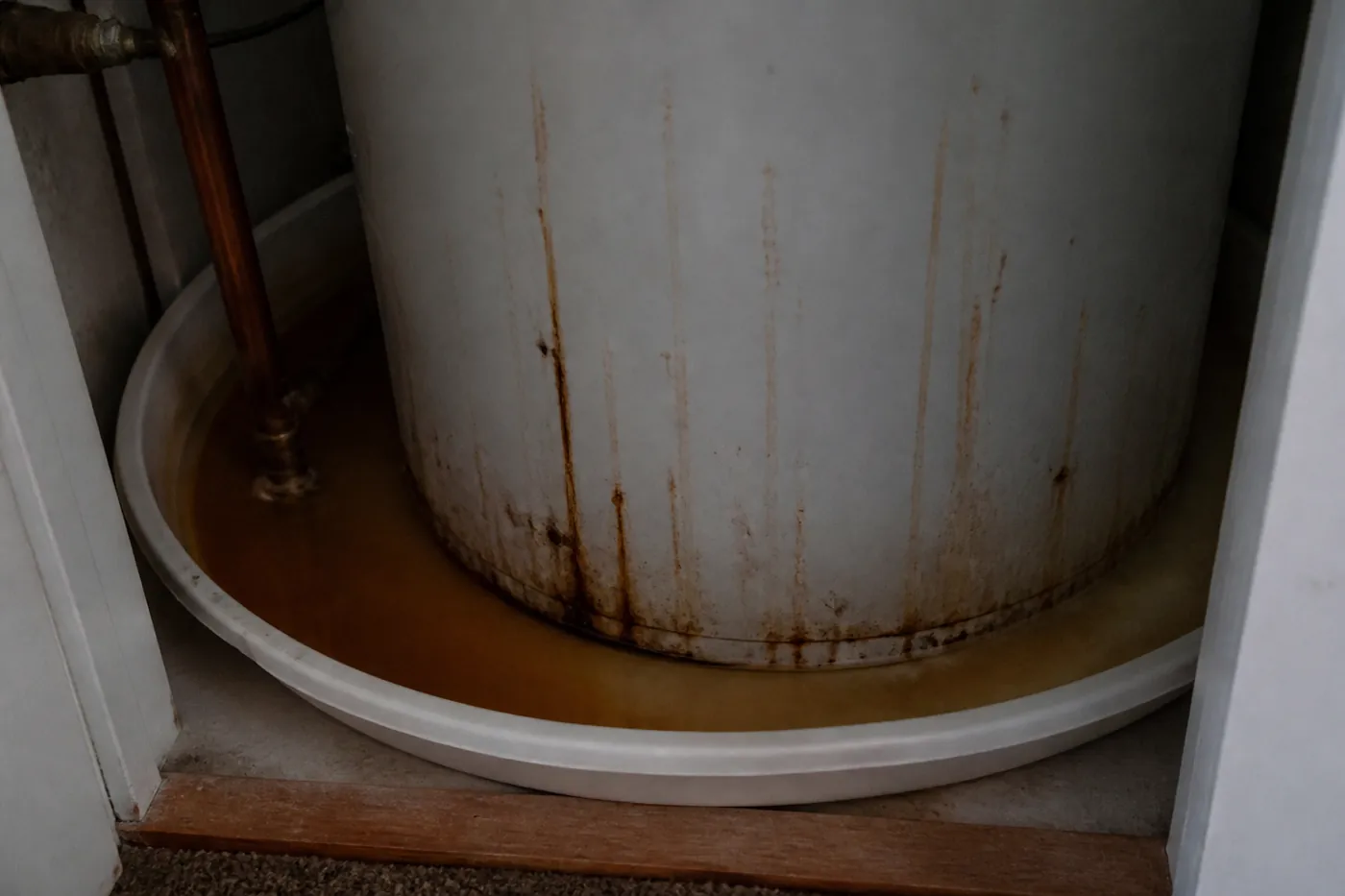
The best guide to how long a cylinder is built to last is its cylinder warranty, because that is what the manufacturer will stand behind. After that, water quality, the anode and how the cylinder was installed decide the rest.
Cylinder warranty by brand and lining
| Range | Lining | Cylinder warranty |
|---|---|---|
| Rheem MPVE, mains pressure | Vitreous enamel | 10 years (units made after June 2018) |
| Rheem MPSS, mains pressure | Duplex stainless | 10 years |
| Rinnai ME, mains pressure | Vitreous enamel | 7 years |
| Rinnai MS, mains pressure | Duplex stainless | 10 years |
| Thermann electric 80 to 300L | Vitreous enamel | 10 years |
| Thermann 25L and 50L | Vitreous enamel | 7 years |
| Rheem and Rinnai low pressure copper | Copper | 5 years |
Labour cover is usually shorter, and only applies when a licensed person installed the cylinder. Full terms in cylinder warranties compared.
What we see in practice
In our experience on Auckland jobs, mains pressure enamel cylinders are often due for replacement at around 10 years, while old low pressure copper cylinders regularly pass 20. Copper runs at low pressure, which is gentler on the tank; an enamel cylinder relies on its anode, and once that is used up the steel starts to go.
Signs a cylinder is near the end
- Water around the base of the cylinder, not from a valve or pipe joint. A tank leak cannot be repaired.
- Rusty or discoloured hot water.
- A rotten egg smell from the hot tap (often the anode, see what the anode does).
- Rumbling or popping as it heats, which can be sediment on the bottom.
A dripping relief valve or a leak at a fitting is usually a valve or joint, not the tank: see cylinder leaking.
What makes a cylinder last longer
- Choosing the lining for your water: stainless is not for bore water, copper is fussy about pH. See enamel, copper or stainless.
- Correct valves, so the tank is not living at too high a pressure.
- Checking the anode on enamel cylinders and replacing it before it is gone.