
Hot water cylinder anode rod: what it does and when to replace it
What a sacrificial anode is, why enamel cylinders need one, magnesium versus aluminium, the rotten egg smell, and the Thermann anode sizes by cylinder.
Last reviewed 2026-10-28
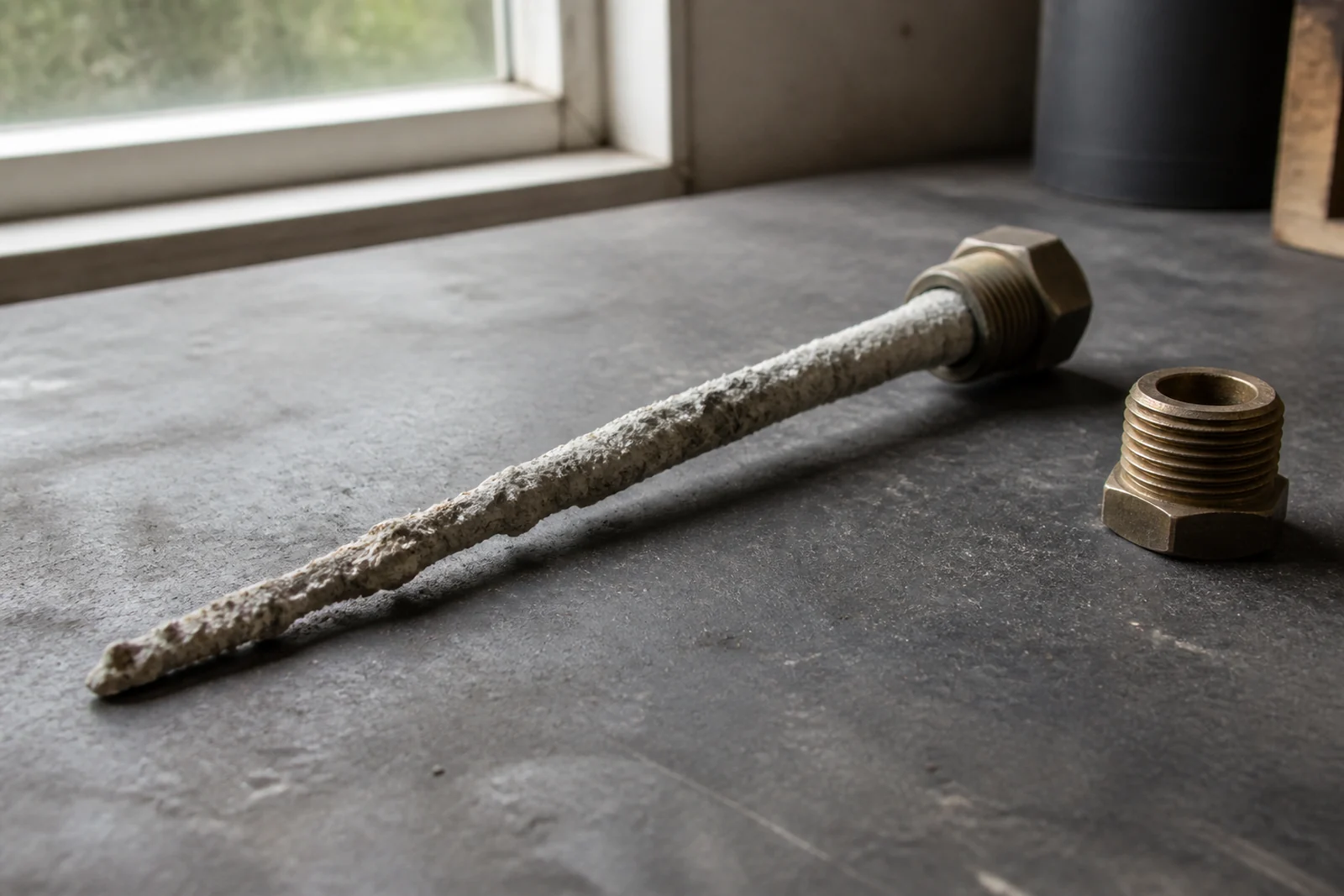
An anode is a metal rod, usually magnesium or aluminium, screwed into the top of an enamel cylinder and hanging down inside the water. Its job is to corrode so the tank does not.
Why an enamel cylinder needs one
The glass lining of a vitreous enamel cylinder is never perfect: there are tiny gaps where water touches bare steel. The anode is a more reactive metal, so corrosion attacks it first and leaves the steel alone. It is called sacrificial because it is designed to be used up. When it is gone, the steel starts to corrode, and that is how most enamel cylinders end.
Checking and replacing it
An anode is a maintenance item. Checking it and replacing it before it is used up is one of the few things that genuinely extends a cylinder's life. It needs the cylinder isolated and the pressure released, and clearance above the cylinder to pull a long rod out: Rheem's stainless instructions specifically require clearance for anode removal. This is work for a licensed person.
Anode lengths for Thermann cylinders
Thermann list their replacement anodes by cylinder, which shows how long these rods are and why a long one needs clearance above the cylinder to pull out:
Magnesium or aluminium?
Magnesium is the usual standard fit. In some water, bacteria react with a magnesium anode and the hot water smells of rotten eggs (hydrogen sulphide). Changing to a different anode type is a common fix, along with flushing the cylinder. See cloudy, milky or smelly hot water.
Do all cylinders have an anode?
No. Rinnai state an anode is not required on their duplex stainless range. Compare linings in enamel, copper or stainless.