
The hidden part that changes hot water cylinder prices
Two cylinders can hold the same amount of water and still be very different buys. The price usually comes down to the lining, the warranty conditions, the shape, the casing, and the water you are asking the cylinder to live with.
Last reviewed 2026-09-08
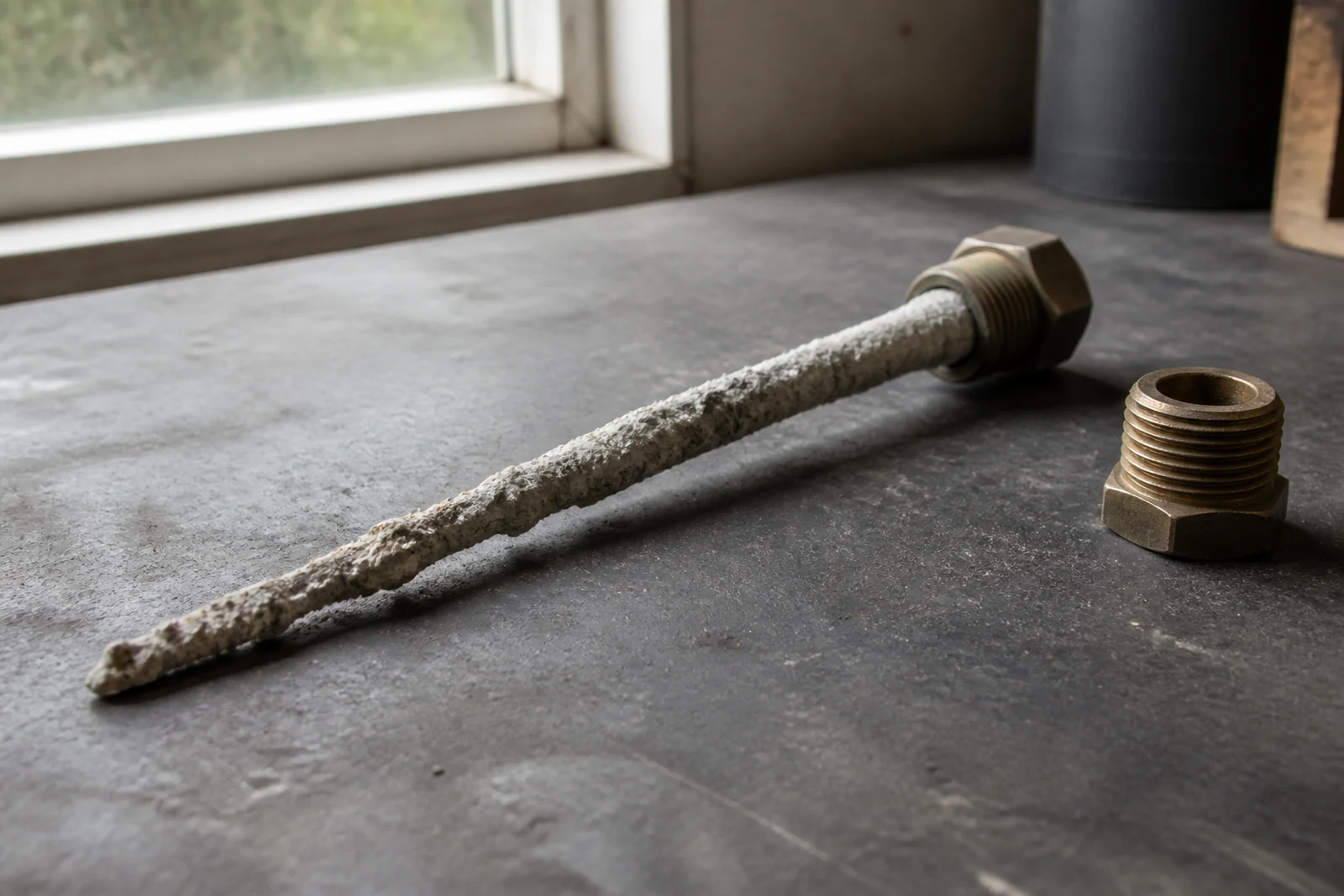
There is a metal rod inside most hot water cylinders that is designed to dissolve. The rod is called a sacrificial anode, and its job is to be eaten away so the cylinder is not.
That one detail explains a surprising amount about cylinder prices. It also explains why two cylinders that look similar on a quote can have different warranties, different water rules, and different maintenance expectations. Most people only meet these words on the day their hot water fails, which is not the calmest time to learn them.
At Hot Water Sorted, the prices shown are supply only and include GST. Installation is a separate conversation with the office. This guide is about what the product price is buying, so you can compare like with like before you choose.
The first price surprise: stainless can be cheaper
Many people assume stainless steel must be the premium option and vitreous enamel must be the cheaper one. In this part of the market, that is not always true. At both 180L and 250L, the Rinnai duplex stainless cylinder is cheaper than Rinnai's own vitreous enamel cylinder of the same capacity, and it carries three more years of cylinder cover.
- Rinnai 180L slimline, vitreous enamel: $1,390
- Rinnai 180L stubby, vitreous enamel: $1,680
- Rinnai 180L duplex stainless: $1,560
- Rheem 180L duplex stainless: $2,060
- Rinnai 250L vitreous enamel: $2,480
- Rinnai 250L duplex stainless: $2,350
- Rheem 250L duplex stainless: $3,230
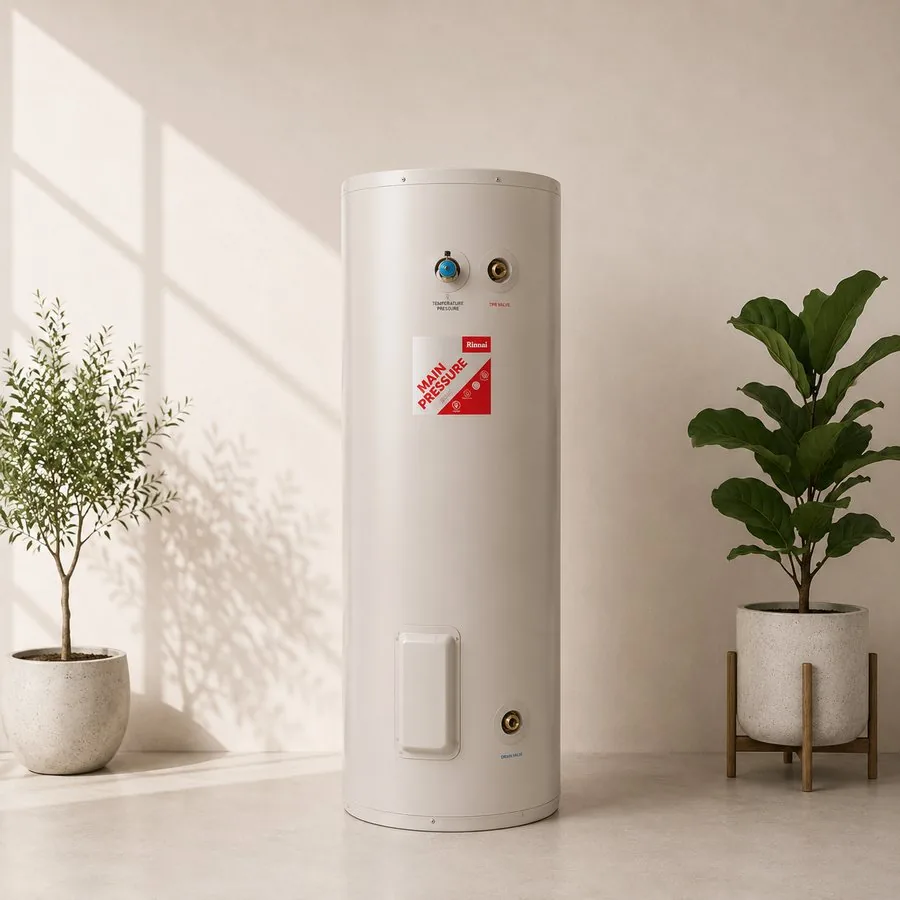
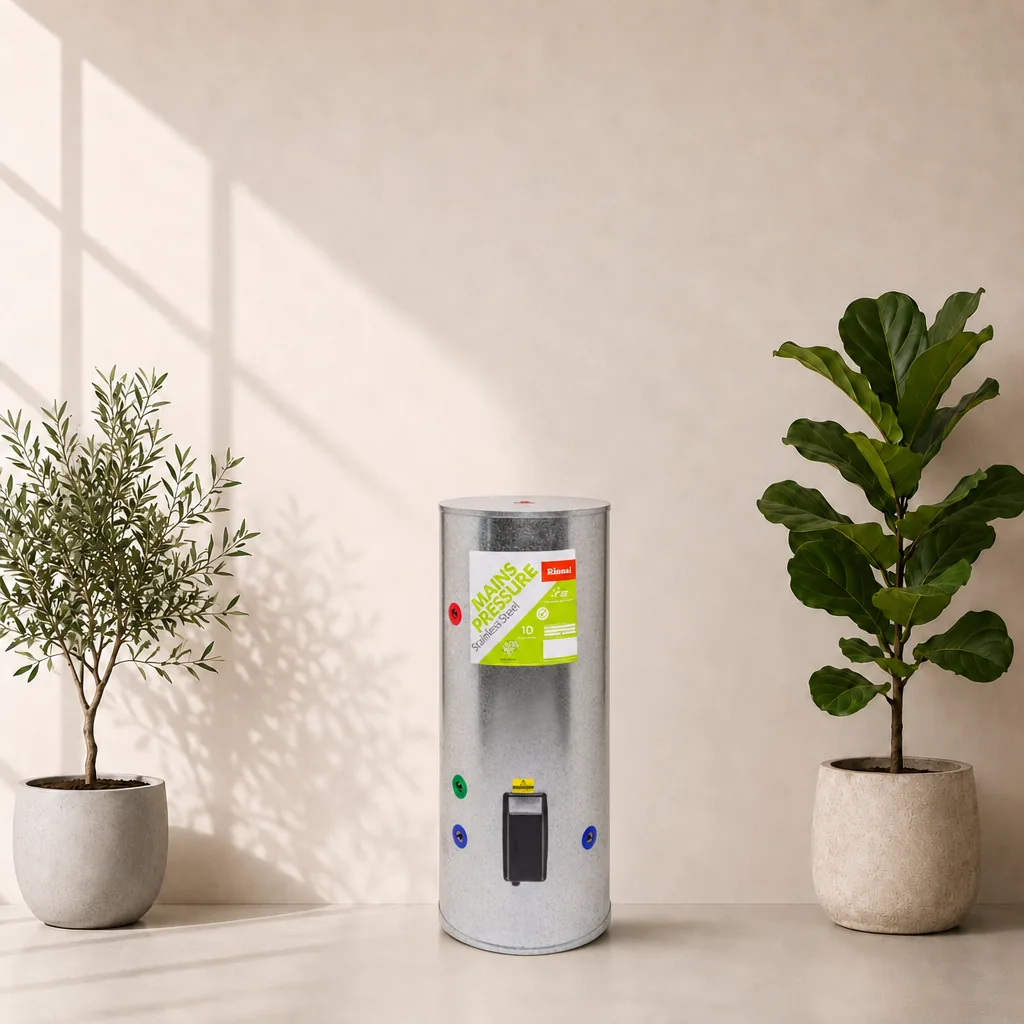
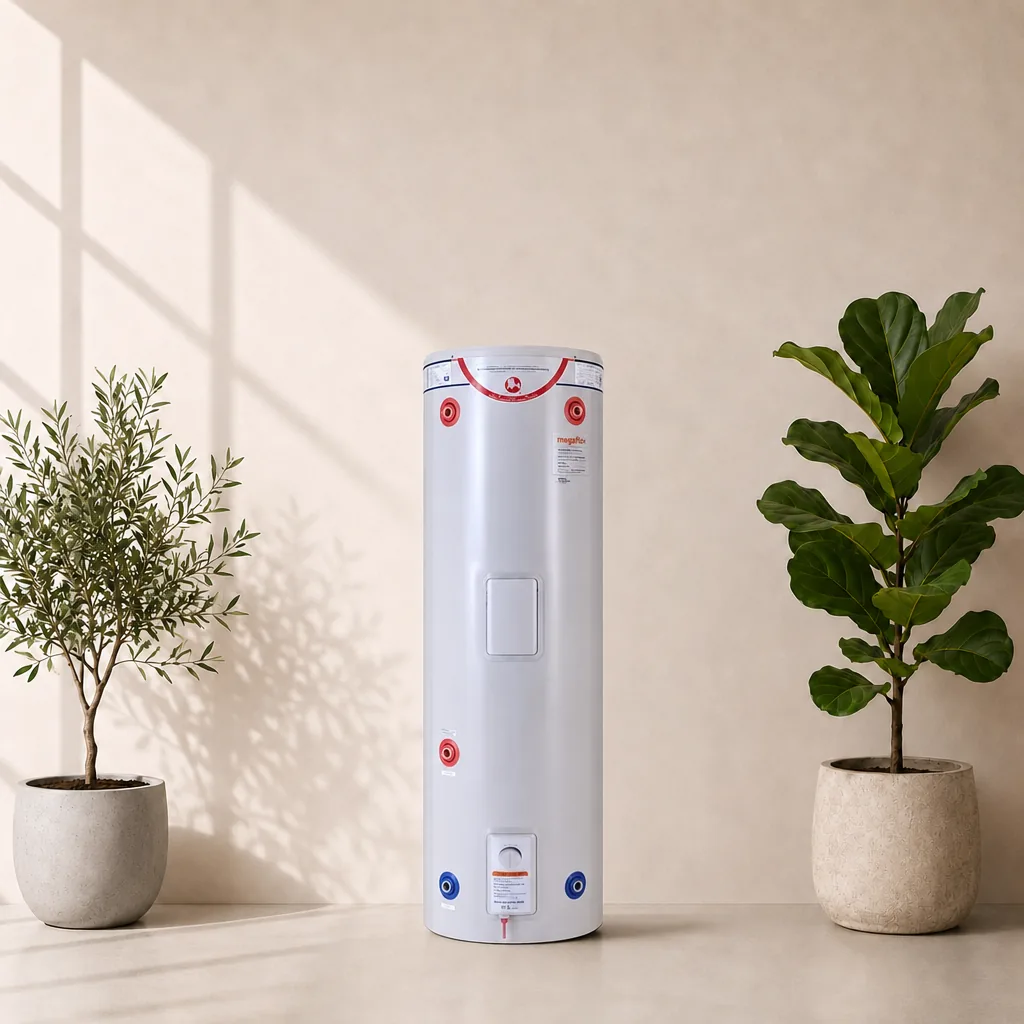
There is another lesson in that list. The brand gap can be bigger than the material gap. Two 250L stainless cylinders can have the same general lining type, the same capacity, and ten year cylinder cover, yet still sit hundreds of dollars apart. Price is not just litres and metal.
The three cylinder linings, in plain language
Think of the cylinder lining as the tank's defence system. Hot water is not gentle. It sits against metal, day after day, with minerals and salts from the water supply. Different cylinders deal with that in different ways.
Copper was the New Zealand standard for decades and is still behind most low pressure header tank systems. Copper resists corrosion by itself and does not need an anode. In the current range it is low pressure only, and it has the shortest cylinder cover of the three, at five years on the cylinder.
Vitreous enamel is steel with glass fused to the inside. It is the most common mains pressure cylinder sold today. The glass is there to separate the water from the steel, much like a glass lining inside a thermos separates the drink from the outer body. But glass can chip, so manufacturers add a second defence: the sacrificial anode. Rinnai state seven years on the cylinder. Rheem replace theirs for ten.
Duplex stainless steel protects itself differently. Its corrosion resistance is in the alloy. It carries enough chromium that the surface grows an extremely thin, tight chromium oxide film. If it is scratched, the film re-forms. That matters because it is not a coating sitting on top of the metal. The protection is a property of the metal itself, so there is nothing to inspect and nothing to replace in that protective film.
The film does have one main enemy: chloride. Chloride breaks the film down and starts pitting. Once you know that, the odd-looking limits on stainless cylinder specification sheets start to make sense.
What the anode is actually doing
The anode in an enamel cylinder is not an optional extra. It is galvanic protection. A more reactive metal corrodes preferentially, so the steel does not. In everyday terms, the anode volunteers to lose the fight first.
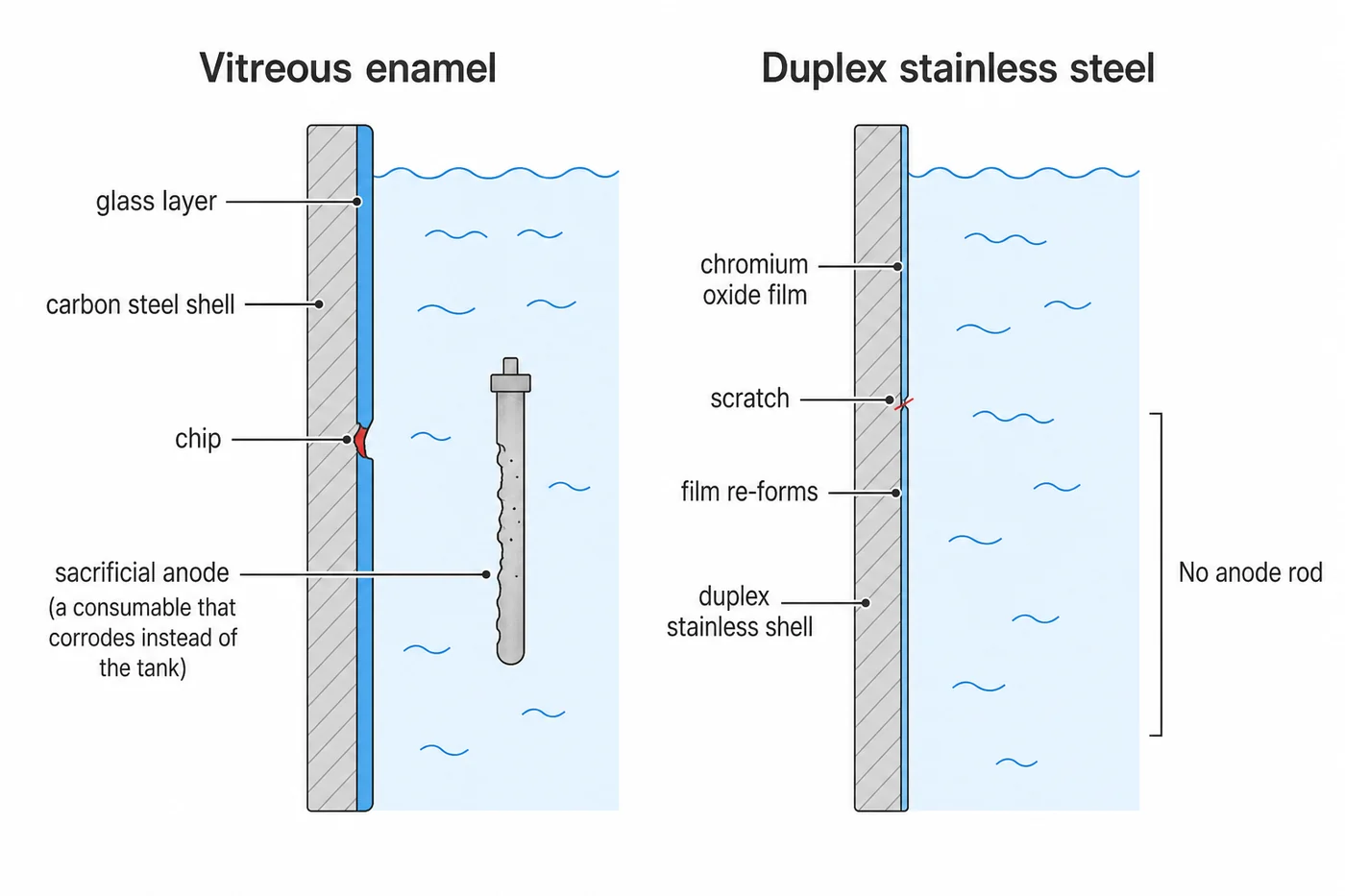
The sacrificial name comes from that role. It works by being consumed, which means it is a maintenance item. Manufacturers expect it to be inspected and replaced. Almost no homeowner ever does this, usually because almost no homeowner knows the rod exists until someone points it out after a problem.
For that reason, a cheaper-looking choice is not always as simple as the number on the product page. Vitreous enamel is a proven, widely used construction, but its protection system includes a part that is meant to wear away. Stainless avoids that particular maintenance item because its main protection is built into the metal.
But be careful with the phrase stainless has no anode
You will often hear that stainless cylinders do not have an anode. The statement is only half true, and the distinction matters if you are comparing brands.
Rinnai state anode not required for their duplex stainless range, and the installer guide for that range never mentions one.
Rheem's stainless installation instructions require clearance for anode removal and replacement. That sentence does not appear in their enamel instructions, so it is not boilerplate. Whether the Rheem unit physically contains one is inferred from that clearance requirement, not confirmed by the wording we are relying on here. The safe statement is this: Rheem's stainless instructions require clearance for anode removal and replacement.
The Rheem wording is a good example of why it pays to look at the manufacturer's documents, not just the usual shorthand. A phrase can be mostly right and still miss the part that affects your cupboard space or your future servicing conversation.
Your water can decide whether the warranty works
A hot water cylinder does not live in a laboratory. It lives with your water. Town supply, bore water, tank water, hardness, minerals, silt, pH, chloride, all of it can matter. The warranty conditions are not just about the cylinder being the right size or the right brand.
For Rinnai stainless, the stated limits are chlorides under 100 mg/L, TDS under 600, total hardness under 200, pH 6.5 to 8.5, sodium under 150, and iron under 0.5. Rinnai also require an inline filter where there is silt or discolouration, because particles settle and corrosion starts under them. If a system is unused, Rinnai say to flush it every eight weeks, because standing water promotes corrosion.
For Rheem stainless, the stated limits are chloride up to 250 mg/L, magnesium under 10, calcium under 20, TDS under 600, and pH 6.5 to 8.5. Rheem state that water testing is at the owner's cost.
This is where a lot of online advice becomes too blunt. Bore and tank water is a condition, not a ban. Rinnai say to treat it as corrosive, test it before connecting, and make sure it meets the same limits. Those requirements are not the same as saying it cannot be used. They mean the water has to prove it belongs there.
If you are on ordinary town supply, you may never have thought about any of this. If you are on bore or tank water, take a moment to slow down. The cheapest cylinder on the day can become the wrong cylinder if the water sits outside the manufacturer's conditions.
Indoor, outdoor, and why the casing matters
Where the cylinder sits can also change the choice. Rinnai's stainless range is rated indoor only. The indoor-only rating is simple, and it rules out some positions immediately.
On the enamel side, the key difference is the outer casing. Plain galvanised steel is indoor only. Coloursteel with an IPX4 rating is indoor or outdoor. The honest answer to can this go outside is not just about the tank inside. The answer is about the casing around it and its rating.
This detail is easy to overlook when you are focused on litres and price. Two enamel cylinders may both be steel with glass fused inside, but if one has the casing suitable for outdoor exposure and one does not, they are not the same product for your situation.
Shape costs money too
Capacity is only one measurement. A 180L cylinder can be tall and narrow, or short and wide. The water volume may be the same, but the body is not.
Narrow models exist for a reason. They fit cupboards and tight spaces that wider models will not. That convenience is priced. For example, the Rinnai 180L slimline vitreous enamel cylinder is $1,390, while the Rinnai 180L stubby vitreous enamel cylinder is $1,680. Same capacity does not automatically mean same price, because the shape can be the difference between a straightforward replacement choice and a cylinder that simply will not fit where the old one sits.
How the warranty is structured
Cylinder warranties are usually quoted in three parts: cylinder, other parts, and labour. The cylinder term is the one people notice first, but the other parts matter too.
Labour is only honoured when a licensed person installed it. That wording matters. Licensed person is the Building Code and PGDB term.
There is also a common misunderstanding about rental properties. A rented house is not automatically a commercial installation. Rheem define domestic as installed in a single family domestic dwelling. Rinnai define residential as serving a single family dwelling, not used for commercial purposes, with the thermostat at 70 degrees C or below.
What changes the category is the use, or one cylinder serving more than one dwelling. Rinnai's own examples of commercial use include a hair salon, catering kitchen, and communal care facility. Rinnai also explicitly treat a motel as residential where the cylinder serves the equivalent of one dwelling.
Where commercial terms do apply, the change can be severe. Rheem low pressure copper falls from five years to one. For that reason, it is worth getting the use category right, rather than assuming landlord means commercial or business address means one simple answer.
So what are you paying for?
When two cylinders hold the same amount of water but cost different amounts, the difference may be paying for any of these things: a different lining, a longer cylinder cover, a different brand position, a shape that fits a tighter cupboard, an outdoor-rated casing, or a water chemistry tolerance that suits your supply better.
There is no single best cylinder for every home. Vitreous enamel is common, proven, and widely used for mains pressure. Duplex stainless has a built-in corrosion defence and ten year cylinder cover from both brands, but it cares very much about chloride and the rest of the water chemistry. Copper remains important in low pressure header tank systems, but in the current range it is low pressure only and has five years on the cylinder.
If your cylinder has failed, the fastest useful starting point is not brand loyalty. The facts of the site are the fastest useful starting point. Tell us the capacity of the old cylinder, where it sits, and whether you are on town supply, bore water, or tank water. From there, we can help you compare the product options without guessing at the parts that really change the price.