
Low pressure or mains pressure: the first choice you cannot guess
A low pressure cylinder can be rated for 76 kPa while a mains pressure cylinder can be rated for 850 kPa, so this is not a small difference. Before you choose a size or brand, find the data plate and confirm what your house is actually running.
Last reviewed 2026-09-08
A low pressure cylinder is built for 76 kPa. Rinnai state that as both the maximum inlet pressure and maximum working pressure for their low pressure copper range. Mains pressure cylinders in the same market are rated to 850 kPa. The 76 kPa low pressure rating is the first thing to understand if your old cylinder has failed and you are trying to buy the right replacement. They are not two versions of the same thing, because they are built for very different pressure conditions.
Most people start by asking for a 180 litre cylinder, or by comparing copper, enamel and stainless. Starting with capacity or material is understandable, but pressure has to come first. The first fork in the road is pressure. If the house is on low pressure, you need a cylinder suitable for low pressure. If the house is on mains pressure, you need a cylinder suitable for mains pressure. If the answer is uncertain, guessing from how the cupboard looks can lead you badly wrong.
The good news is that you usually do not need to become a hot water expert. You need one reliable clue: the data plate on the side of the existing cylinder. A clear photograph of that plate is often enough for the office to tell what you have. The plate will usually state the pressure rating, the capacity, the model and other details that matter when matching a replacement.
What low pressure actually means
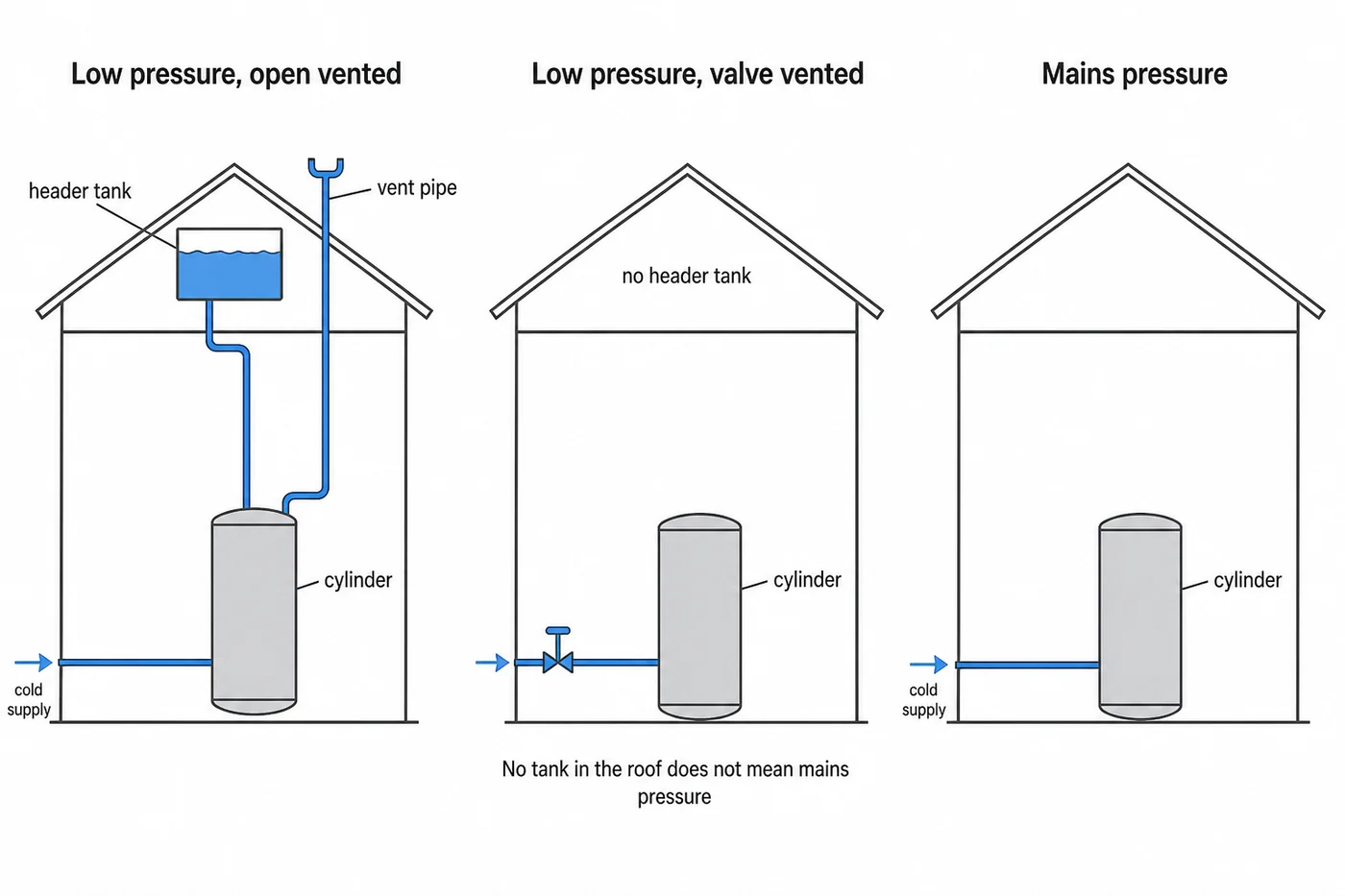
Low pressure hot water is sometimes called open vented or gravity fed. In simple terms, the hot water side of the house is not working at the same pressure as the cold mains pipe coming in from the street. The cylinder is protected by the way the system is arranged, because the cylinder itself is only designed for low pressure.
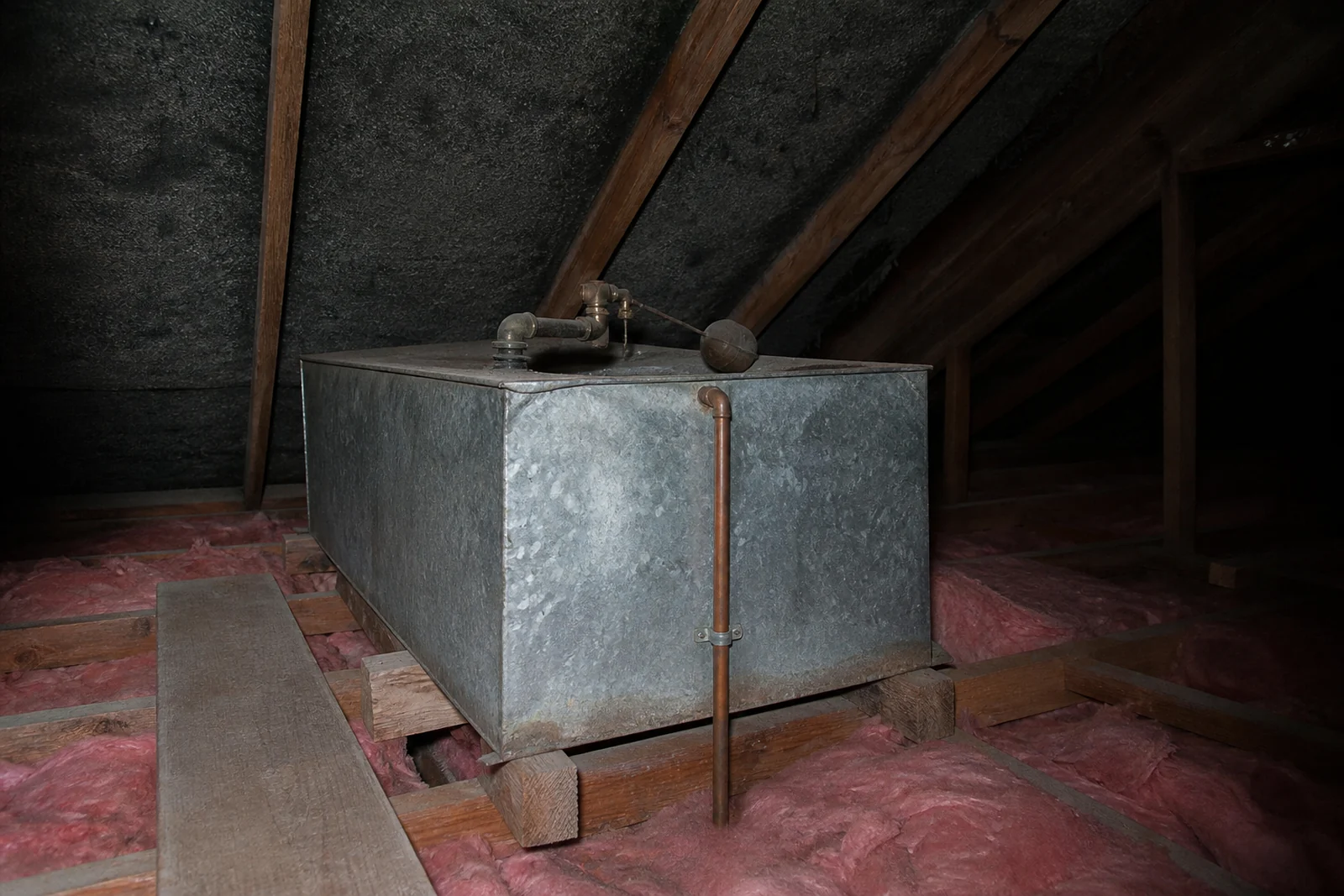
Two common arrangements are used. The first is open vented. Many people picture this one: a header tank in the roof space feeds the cylinder, and a vent pipe runs up and finishes outside the building above the roof line. Rinnai require that vent pipe to be at least 20 mm internal diameter. The header tank is like a small reservoir above the cylinder. The height of the water gives the system its pressure.
The second arrangement is valve vented. A valve vented system has no header tank in the roof. Valves reduce the pressure instead. The missing header tank is the reason one of the most common shortcuts is wrong. No header tank in the roof does not prove the house is on mains pressure. The missing tank only proves the roof has no header tank. A valve vented low pressure system can look, to a homeowner, as if it must be mains pressure when it is not.
If someone has told you to stick your head into the roof space and, if there is no tank, order a mains pressure cylinder, do not rely on that. The shortcut is tempting because it is quick. The same shortcut is also the exact mistake that catches people out.
What mains pressure means
A mains pressure cylinder is designed to run at the incoming water pressure, subject to the controls and limits required in the installation. Rinnai and Rheem mains pressure cylinders are rated to a maximum working pressure of 850 kPa. The 850 kPa figure is the cylinder rating, not a statement that your street water arrives at 850 kPa.
The distinction matters. AS/NZS 3500.4 sets a maximum building hot water pressure of 500 kPa. When you see 850 kPa in the manufacturer information, read it as the maximum working pressure rating of the cylinder, not as the normal pressure coming through every New Zealand home.
From a homeowner point of view, mains pressure usually means better hot water flow at taps and showers, especially when more than one outlet is being used. But flow at the tap is still only a clue. A house can have weak hot water for more than one reason. Strong cold water with noticeably weaker hot water is a symptom of low pressure, not proof.
How to tell what you have without guessing
Use these checks in this order. The first one is the one that matters most.
- Photograph the data plate on the existing cylinder. The data plate gives the reliable answer. The plate normally shows the pressure rating and model details. Send the photo through rather than trying to describe the cylinder from memory.
- If there is a header tank in the roof space, the system is low pressure. A header tank in the roof space is a clear sign.
- If there is no header tank, do not assume mains pressure. A valve vented low pressure system has no header tank.
- If the hot water flow is weak while cold water runs strongly, that suggests low pressure. Weak hot water flow while cold water runs strongly is useful information, but it is not proof by itself.
- If you are unsure, stop before buying. A replacement cylinder is not the place to hope the old one was probably mains pressure.
A plumber can also confirm the system, of course. If you are thinking about changing from low pressure to mains pressure, that is a separate conversation to have with a plumber. This guide stays with the product choice, because conversion work is installation work and it needs to be assessed on site by a licensed person.
What we stock in low pressure
The low pressure choice is much narrower than the mains pressure choice. On this site, the low pressure range is all indoor only, and no option sits above 250 litres. The low pressure options listed are:
- 135L Rheem vitreous enamel $1,360
- 135L Rheem copper $1,680
- 135L Rinnai copper $1,740
- 180L Rheem vitreous enamel $1,570
- 180L Rinnai copper $1,780
- 180L Rheem copper $1,970
- 250L Rinnai duplex stainless $2,200
The stocked range tells you quite a lot. If you are replacing an older low pressure cylinder, you may not have the same spread of capacities, formats and outdoor choices that you would see in mains pressure. Low pressure is not just a different pressure rating. It also narrows the shelf of products you can sensibly choose from.
What mains pressure looks like at the same sizes
For comparison, here are mains pressure cylinders at the same common capacities:
- 135L Rinnai enamel slimline $1,220
- 180L Rinnai enamel slimline $1,390
- 180L Rinnai duplex stainless $1,560
- 250L Rinnai duplex stainless $2,350
Across the broader range, mains pressure gives nineteen products to choose from against seven low pressure products. Mains pressure also gives more capacities, outdoor rated options, and stainless up to 300 litres. Every house does not need mains pressure because of that. Once you know the pressure system, the available product range changes quickly.
Low pressure is not automatically the budget option
This surprises a lot of people. Low pressure sounds simpler, older and cheaper. Sometimes low pressure is cheaper, and sometimes it is not.
At 135 litres, the cheapest option in the whole range is a low pressure enamel cylinder. At that size, the budget instinct happens to point in the right direction.
At 180 litres, the cheapest option in the whole range is a mains pressure cylinder, and it undercuts every low pressure cylinder of that size. Actual product comparison matters because low pressure does not always mean lower price.
The more important point is still compatibility. A cheap cylinder that is wrong for the house is not cheap. Once pressure is confirmed, then price, capacity and material can be compared properly.
Copper, enamel and stainless, in plain terms
Low pressure cylinders in New Zealand have historically been copper, and copper is still what sits behind many header tank systems. Copper is a familiar material in hot water, and many older homes still have copper low pressure cylinders quietly doing their job.
But copper is not the easy going option in every respect. Copper is fussier about pH than stainless. Rinnai's water limits for low pressure copper are pH 6.8 to 7.5 and iron under 0.1 mg/L. Their stainless range allows pH 6.5 to 8.5 and iron under 0.5. On that measure, stainless accepts a wider water range.
Water chemistry matters because a cylinder does not just hold hot water. The cylinder lives with the chemistry of that water every day, like a kettle that never gets emptied. Water that is too hard, too aggressive or outside the manufacturer limits can shorten the life of the cylinder and affect warranty cover.
Rinnai low pressure copper cylinders have a copper inner cylinder, a galvanised steel outer casing, an IPX1 rating, and are indoor only. They are not suitable for hard or aggressive water. The factory thermostat setting is about 65 degrees C on a standard cylinder, and about 70 degrees C on a wetback model.
Vitreous enamel is a glass-like lining bonded inside the steel cylinder. Stainless and copper are different approaches again. If you want a wider explanation of why these cylinder types and linings change the price, see /guides/why-cylinder-prices-differ. The short version here is that material is not just a marketing word. Material affects water suitability, product range, warranty and price.
The weight is worth thinking about
Weight is one of those details nobody cares about until the day the old cylinder has to come out of a cupboard. Rinnai's 180L low pressure copper cylinder is 26 kg empty and 206 kg full. The full weight does not mean you should be moving it yourself. The full weight simply shows why location matters, especially in older homes where cylinders sit in tight cupboards, roof spaces or awkward corners.
When you ask for help choosing a replacement, it is useful to say where the cylinder sits. Hall cupboard, laundry cupboard, roof space, internal room, garage and outdoor positions all raise different product questions. For low pressure, remember the stocked range listed here is indoor only.
Warranty cover is not the same across the range
Pressure type and material also affect warranty. The low pressure copper cover is the weakest in the range: five years on the cylinder, one year parts and labour. On a non-domestic installation, Rheem's cover drops to one year on everything.
The 250L low pressure stainless cylinder is an HJ Cooper product sold by Rinnai, and its terms need to be read carefully. Everything is covered in year one. The inner cylinder is replaced free of charge in years two to ten, but from year six the removal, re-installation and labour are the owner's cost. Ten years is not ten years of the same thing.
Mains pressure enamel and stainless both carry longer cover than low pressure copper. Longer cover does not make them the right answer for a low pressure house by default. The longer cover does mean warranty should sit beside price when you are comparing suitable products.
What if the answer is uncertain, or might change later?
One product type should be on your radar even though we do not currently list it. Rheem make an All Pressure vitreous enamel range that is rated to 850 kPa and is documented for both mains pressure and low pressure installation. The 850 kPa rating and dual documentation make it a genuine drop-in option for a house where the answer is uncertain or may change later.
Because the All Pressure range is not currently listed on this site, do not assume it is sitting on the shelf. If that kind of cylinder sounds like what you need, ask us. The main point is that a cylinder able to work on either pressure system does exist, and it may be part of the conversation before you commit to a standard low pressure or mains pressure model.
Before you buy, send three things
If your cylinder has failed, a photo is quicker and more useful than a long description of the shower pressure. Send:
- a clear photograph of the data plate on the existing cylinder
- the capacity, if you can read it
- where the cylinder sits in the house
With those three details, it is much easier to confirm whether you are looking at low pressure or mains pressure, and to narrow the replacement choices to cylinders that actually belong in your home. Pressure first, then capacity, then brand. That order saves trouble.